


Which Tone to Choose? A Guide to Defining Your Closet Color Based on Your Space Dimensions
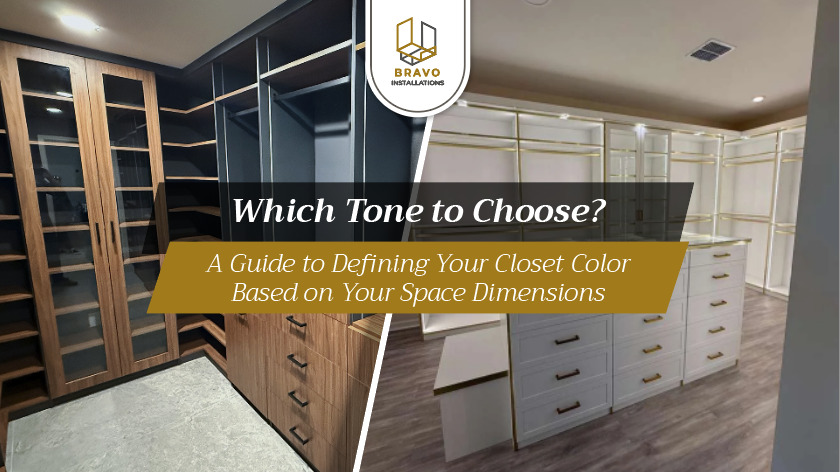
When designing a custom closet, most homeowners focus on drawers and hanging rods. However, color is the most powerful tool to change how a room feels. The right finish can make a narrow reach in feel airy or a large walk-in feel like a high-end boutique.At Bravo Installations, we help you choose the base tone not just by preference, but by the physical reality of your space. Here is our professional guide:
1. Small or Narrow Spaces: The Power of Light Tones
If you are working with a compact reach-in or a narrow hallway closet, your goal is to “push back” the walls.
- The Go-To Choice: High gloss White, Soft Greige, or “Morning Mist.”
- Why it works: Light colors reflect more light, making the boundaries of the closet less obvious. This prevents that “claustrophobic” feeling when you’re getting dressed.
Pro Tip: Pair light cabinetry with a mirrored back panel to double the perceived depth.
2. Large Walk-In Closets: Texture and Contrast
In a spacious walk-in, a plain white closet can sometimes feel cold or “empty.” This is your chance to add architectural character.
- The Go-To Choice: Warm Oaks (like our Aurora finish), Sand Textures, or even Dark Charcoal.
- Why it works: Large spaces can handle the “weight” of darker or textured tones. Wood grains add a sense of luxury and permanent furniture quality.
3. Low-Light Areas: Warm Neutrals
Many closets don’t have windows. In these cases, pure white can look “grayish” or clinical under artificial yellow light.
- The Go-To Choice: Creamy Off-whites or Light Wood textures with warm undertones.
Why it works: These tones harmonize with LED closet lighting, creating a glow that feels inviting rather than harsh.
Don’t Imagine It See It in 3D
Choosing a color from a small swatch is difficult. That’s why at Bravo Installations, we provide a Same-Day 3D Design. We project your chosen color into a digital model of your specific room dimensions, so you can see exactly how the light hits the finish before we even cut the first piece of wood.